
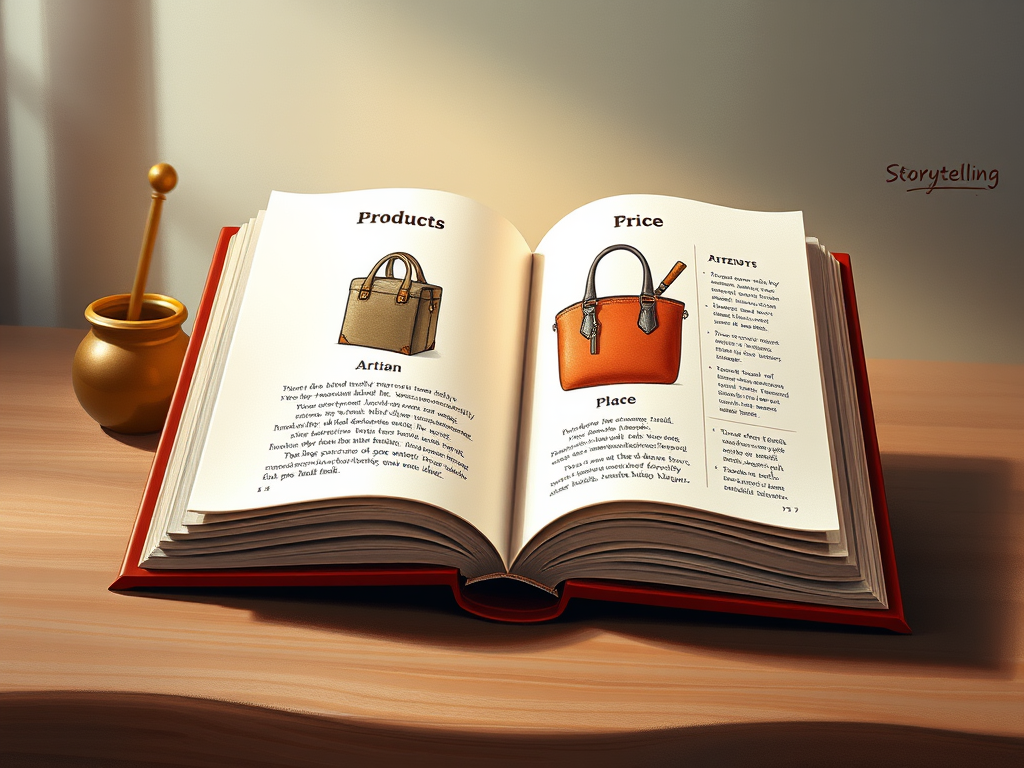
Turning Products into Narratives
In the golden age of information, consumers are bombarded with content—but what they truly remember are stories. And when storytelling is woven thoughtfully into the 4Ps of marketing—Product, Price, Place, and Promotion—you don’t just sell a product. You build a brand people care about.
Let’s explore how each P can be amplified through the power of story.
1. Product: The Story Behind the Solution
Every product has a backstory—why it was created, whose problem it solves, and what human need it answers. The more personal and relatable that origin story is, the stronger the emotional connection.
Example:
Instead of saying, “This is a hand cream with aloe and jojoba,” tell the story:
“A mother of three, tired of dry, over-sanitized hands, created this soothing balm using age-old recipes passed down from her grandmother.”
Now, it’s not just a hand cream—it’s a lineage of care.
🔹 Tip: Let your product be the hero or the helper in a customer’s journey.
2. Price: The Value in the Story
Price is never just a number—it’s an indicator of perceived value. Storytelling can justify premium pricing or create excitement around affordability.
Example:
A $150 artisan bag might seem overpriced—until you learn it was handcrafted by a single mother in a Himalayan village, each piece supporting a sustainable livelihood.
Or flip it:
A startup launches a $9 design tool, not because it’s basic, but because it believes “creativity should never be locked behind a paywall.”
🔹 Tip: Tell the story of why it costs what it does. People pay for what they believe in.
3. Place: The Journey to Your Product
“Place” is more than distribution—it’s about where and how people encounter your story. Do they walk into a boutique with a curated narrative, or scroll through an Instagram ad that feels like a friend’s recommendation?
Example:
A soap company sells online—but every order comes wrapped in recycled poetry pages from forgotten books, making the delivery itself a part of the story.
🔹 Tip: Let the buying journey feel like entering a chapter, not just clicking a button.
4. Promotion: Lead With Story, Not Specs
In promotion, storytelling is your emotional hook. It’s what turns a campaign into a movement.
Example:
Instead of “Join our gym for $29.99/month,” say:
“She walked in tired. Six weeks later, she ran her first mile. Our gym isn’t about muscles—it’s about momentum.”
You’re no longer promoting a facility. You’re promoting transformation.
🔹 Tip: Build campaigns that invite your audience to become part of the narrative.
The Takeaway
The 4Ps aren’t just a marketing framework—they’re stages in a story waiting to be told. When narrative meets strategy, your brand becomes more than a business—it becomes an experience, a memory, and sometimes even a belief.
So next time you map your marketing plan, ask: What’s the story your 4Ps are telling?

Leave a Reply