
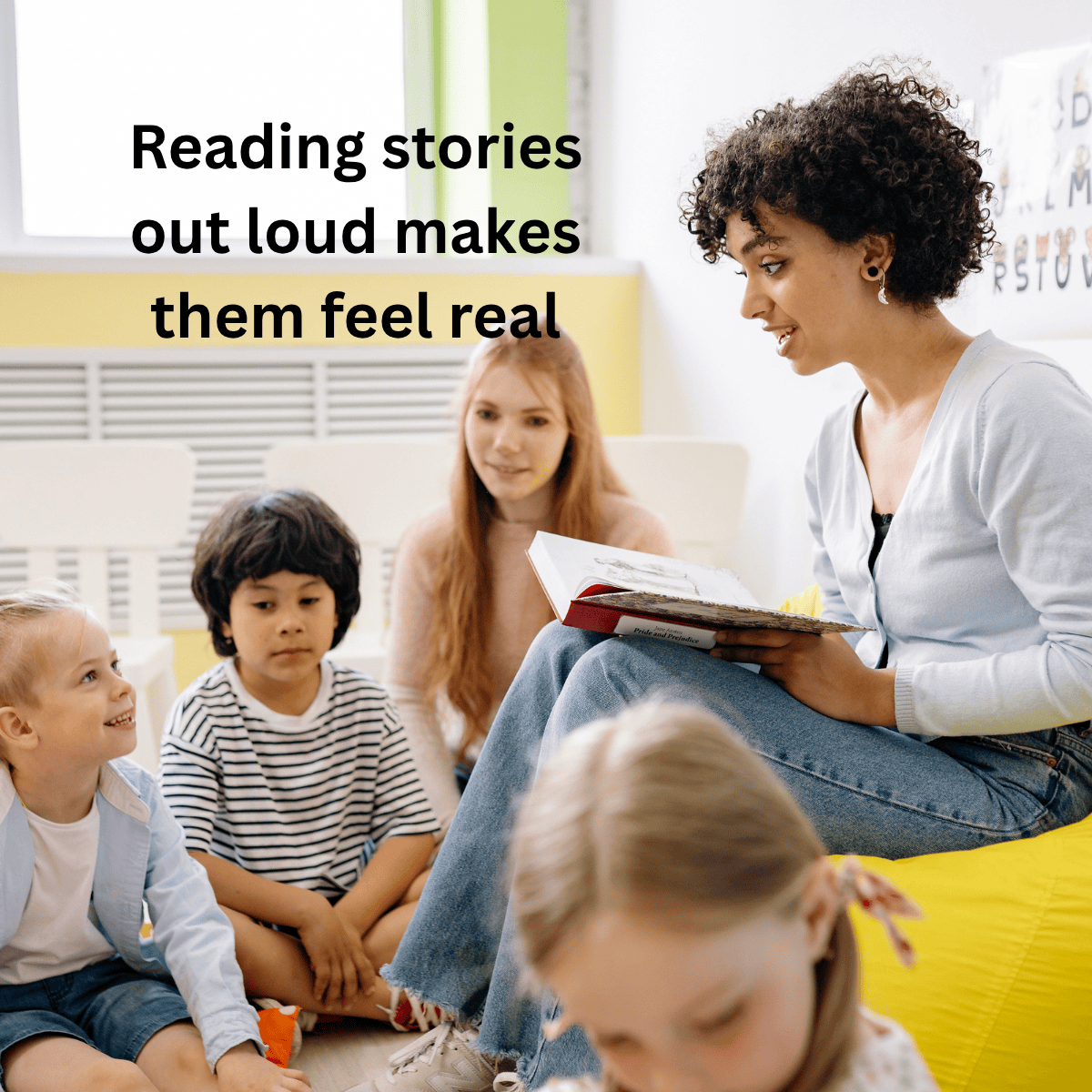
Long before a child becomes an independent reader, the ear begins its work.
A child listens before the child decodes. The cadence of language is absorbed before it is analyzed. Meaning is often entered through sound, rhythm, tone, pause, and emotional atmosphere well before it is mastered on the page. For this reason, read-alouds are not a secondary pleasure in literacy development. They are one of its earliest and most powerful forms.
To read aloud to a child is to do far more than share a story.
It is to introduce language as something living. It is to model fluency before fluency is expected. It is to show that reading is not merely mechanical extraction, but a human act shaped by voice, intention, and feeling. It is to invite children into the music of language before asking them to perform its technical demands alone.
This is why read-alouds continue to matter so profoundly, in homes, in classrooms, and across the many spaces where children grow into literacy.
Listening is not passive
There is a persistent temptation in educational discourse to place visible reading above listening, as though the child silently decoding text is engaged in more serious work than the child absorbed in a story being read aloud.
This is a mistaken hierarchy.
A child listening attentively to a read-aloud is engaged in significant intellectual work. The child is following sequence, anticipating events, attaching meaning to tone, noticing repetition, responding to character, making predictions, interpreting mood, and building comprehension in real time.
Listening to a story well told is not passive reception. It is active meaning-making.
Indeed, many of the underlying habits required for strong reading begin here. The child learns how language moves, how ideas connect, how tension builds, how emotion alters interpretation, and how meaning often resides not only in words themselves, but in the way they are carried.
Read-alouds build the bridge into literacy
For many children, especially in the early years, the distance between what they can understand and what they can independently read is considerable.
A read-aloud beautifully bridges that distance.
It allows the child to encounter language, ideas, and narrative complexity beyond current decoding ability. A child may not yet be able to read a rich text alone, but can understand it, delight in it, and think deeply about it when it is voiced with care. This matters enormously.
Read-alouds prevent literacy from becoming too narrow too soon.
They remind us that reading development is not only about what a child can decode independently on a given day. It is also about what the child can comprehend, imagine, discuss, and emotionally inhabit when language is made accessible through shared reading.
That wider encounter nourishes growth. It stretches understanding upward.
Language enters differently through the ear
There are aspects of language that children grasp most fully when they hear them.
Syntax, phrasing, rhythm, emphasis, irony, warmth, urgency, tenderness, humor, suspense, all of these are often more readily apprehended through the spoken voice than through silent print, particularly in the earlier stages of literacy development.
When adults read aloud with attention, children hear how language breathes.
They hear where a sentence softens.
Where tension gathers.
Where delight rises.
Where silence matters.
Where a phrase deserves weight.
These things shape comprehension. They also shape a child’s sense of what language can do.
A well-read story reveals that words are not inert symbols lined up for obligation. They are expressive instruments. They can soothe, provoke, amuse, unsettle, and illuminate. The child who experiences this begins to understand reading not merely as a school task, but as an encounter with living language.
Vocabulary grows in context
Read-alouds also offer one of the richest environments for vocabulary development.
When children hear unfamiliar words embedded in meaningful narrative, they are far more likely to absorb them with nuance. The word arrives not as a sterile list item, but as part of a lived moment. It carries emotional tone, situational meaning, and relational context.
A child who hears a word spoken in story does not merely meet its definition. The child senses its atmosphere.
This matters especially for multilingual learners and for children navigating more than one linguistic environment. Read-alouds can provide a humane and memorable entry into vocabulary, allowing language to be understood in motion rather than abstraction.
Words learned through story often stay longer because they belong to something.
Read-alouds support comprehension before performance
One of the gifts of the read-aloud is that it separates comprehension from the pressure of immediate performance.
A child who is still developing decoding skills may struggle to read a text aloud independently, yet understand it deeply when it is read to them. In such moments, the child is able to participate in thought without being limited by technical difficulty. This can be profoundly affirming.
It allows the child to respond to ideas, characters, themes, and language without the discouragement that often comes when skill development outpaces confidence.
In classrooms, this is invaluable.
A thoughtfully chosen read-aloud gives all children entry into the same intellectual and imaginative space. It democratizes access to story. It makes discussion possible across varied reading levels. It allows children to think together before they are asked to perform separately.
That shared space is one of the quiet strengths of literacy instruction at its best.
Read-alouds cultivate attention
We live in a time when sustained attention can no longer be assumed.
Children are increasingly shaped by environments of rapid stimulus, visual saturation, and constant interruption. In such a context, the read-aloud becomes more than a literacy practice. It becomes a discipline of presence.
To listen to a story unfold over time is to practice staying.
The child must hold earlier details in mind, wait for connections to emerge, remain open to unfolding meaning, and tolerate not knowing immediately what comes next. These are foundational habits not only for reading, but for thinking.
A good read-aloud teaches patience without preaching it. It trains attention through interest. It invites the child to remain because something meaningful is in motion.
This is no small educational gift.
The emotional power of the shared voice
There is also, in read-alouds, a relational dimension that should not be underestimated.
When a child is read to, literacy is experienced not only as skill-building, but as shared human time. A voice carries care. A pause conveys sensitivity. A repeated phrase becomes communal. Even older children, who may no longer outwardly display the same dependence on shared reading, often remain deeply receptive to the emotional safety and richness of a read-aloud.
This shared dimension matters.
It tells the child that reading is not merely evaluative. It can also be intimate, thoughtful, and deeply enjoyable. It creates associations between books and belonging. It allows language to arrive wrapped in presence rather than pressure.
For some children, especially those who struggle with confidence, attention, or self-expression, this can be transformative. The read-aloud becomes a threshold into literacy that feels welcoming rather than demanding.
A global literacy practice
Across cultures, oral storytelling and shared reading have long played a central role in how children come into language.
Whether around a hearth, at a bedside, in a classroom, under a tree, across generations, or across continents, children have often first encountered narrative as something heard. This is not incidental. It reflects a deep truth about human learning.
Language is social before it is solitary.
Children are formed by hearing thought carried in voice. They learn that stories are not only texts to be completed, but experiences to be entered. In multilingual and multicultural contexts, read-alouds can be especially powerful, allowing children to hear rhythm, idiom, and expression across linguistic worlds while building both confidence and cultural breadth.
A globally aware approach to literacy must make room for this. It must recognize that reading development is strengthened, not weakened, by honoring the oral dimensions of language.
Why read-alouds still matter
Read-alouds matter for literacy development because they cultivate the conditions in which literacy can deepen.
They build listening.
They enrich vocabulary.
They strengthen comprehension.
They model fluency.
They expand access to complex language.
They create emotional connection to books.
They cultivate attention, reflection, and shared thought.
Perhaps most importantly, they remind children that language is meant to be lived with, not merely tested.
In an educational landscape often preoccupied with performance, the read-aloud preserves something essential. It keeps literacy human.
Closing reflection
To read aloud to a child is to offer more than a story.
It is to offer cadence before analysis.
Meaning before measurement.
Connection before performance.
A shared experience of language before the child is asked to carry language alone.
That is why read-alouds matter.
Not as an extra flourish in literacy development, but as one of its most enduring, generous, and quietly powerful foundations.
