
Listen to the post on our YouTube channel
When we analyze the machinery of a timeless narrative, we often focus on character arcs, thematic motifs, or structural pacing. Yet, true storytelling mastery goes beyond plot points, it is an act of deliberate cognitive engineering. The classic public domain tale of Hansel and Gretel serves as a perfect historical fulcrum for this analysis. It demonstrates how master storytellers layer sensory and structural friction to deeply engage human working memory.

In mainstream English Language Arts (ELA) environments and global classrooms, we frequently look for innovative ways to elevate literacy. By deconstructing the structural and sensory craft of Hansel and Gretel, educators and writers can learn how to build immersive narrative spaces that intentionally leverage students’ complete cognitive repertoires given their multilingual proficiencies.
Here is an analytical breakdown of how the craft elements of this classic fairy tale map directly to advanced pedagogical frameworks.
The Anatomy of Sensory Contrast: Constructing Narrative Schema
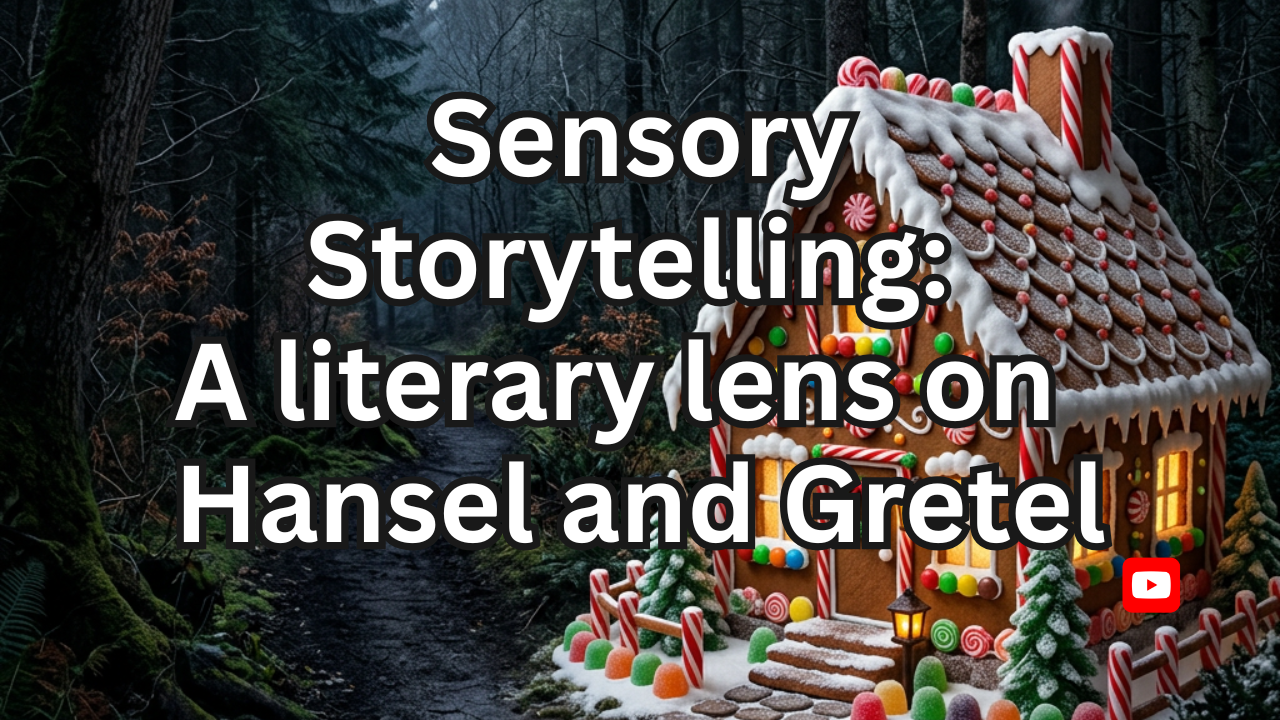
The human brain is naturally hardwired to process and organize information through sensory patterns. In Hansel and Gretel, the author builds immediate engagement by establishing a stark, cross-modal sensory contrast between two distinct environments: the oppressive, low-entropy forest and the high-density, sensory-rich gingerbread cottage.

When Gretel approaches the witch’s cottage, the text rejects flat, unyielding descriptions. The roof tiles are crafted from glossy, glass-smooth sheets of hard crystalline sugar that reflect the pale forest light. Moments later, her touch shifts down to the dark, dense gingerbread walls—a surface that is sandpaper-rough, crusted with coarse spikes of whole clove and crystallized ginger.
This deliberate pairing of opposing tactile textures forces the reader’s somatosensory and visual cortices to fire simultaneously. This cross-modal synthesis drops extraneous cognitive barriers, tricking the brain into “feeling” the architecture. The environment ceases to be a distant, intellectual abstraction; it becomes an anchored, memorable reality.
Deconstructing the Craft: Four Textural Components of Storytelling
By analyzing how Hansel and Gretel captures human focus, we can extract four core storytelling textures to implement as concrete cognitive tools within modern global classrooms.

1. Concrete Textures: Physical Realia
- The Craft Element: The story relies heavily on tangible physical symbols, pebbles gleaming in the moonlight, breadcrumbs scattered across dirt, the rough cinnamon-stick fence post, and the cold iron bars of Hansel’s cage. These objects act as vital physical anchors that drive the plot forward.
- How to Implement It: Bring real, touchable items, traditionally called realia, directly into the reading framework. Before exploring a scene, pass around dry pinecones, rough tree bark, or whole cinnamon sticks. Use an “Opaque Pouch Protocol” where students handle an object inside a velvet bag and describe its texture using oral language or their native language (L₁) before reading the corresponding chapter.

2. Typographic Textures: Visual Architecture
- The Craft Element: In classic print editions, the physical layout of the page mirrors the psychological weight of the scene. The vast, empty wilderness of the forest is balanced by generous white space and flowing paragraphs. In contrast, the frantic, trapped energy inside the witch’s cottage is represented by dense, urgent text blocks.
- How to Implement It: Break down long texts, analytical prompts, or dual-language instructions into punchy, short fragments. Use bold text strategically on core concepts to serve as instant visual anchors. Invite students to format their own creative writing pieces so the physical shape of their paragraphs matches the mood—such as wide line breaks for isolation, or tight, narrow columns to mimic panic and speed.

3. Structural Textures: Strategic Translanguaging and Dialect Mapping
- The Craft Element: Fairy tales are inherently multilingual and multicultural, evolving through fluid oral traditions across diverse regions before ever being frozen on paper. The structural craft of Hansel and Gretel relies on idiomatic building blocks, regional idioms, and universal archetypes that resonate across deep linguistic boundaries.
- How to Implement It: To leverage the complete cognitive repertoires of all learners, educators can split structural analysis into a parallel two-part cognitive journey tailored for both multilingual and monolingual students:
- For Multilingual Students (Translanguaging Architecture): Encourage students to sketch out their initial character profiles, thematic mind-maps, and emotional outlines completely in their native language (L₁), anchoring the complex concepts within their primary linguistic matrix. Then, guide them to actively bridge, synthesize, and translate those deeply rooted ideas into standard ELA writing outputs.
- For Monolingual Students (Etymological and Dialect Mapping): Direct monolingual students to unpack the Germanic roots of the story’s vocabulary (e.g., exploring how words like “woodcutter” or “forest” evolved) or analyze how different regional English dialects or idioms shift the tone of the narrative. Task them with rewriting a core scene using localized idioms or specialized subcultural slang, forcing them to manipulate register, tone, and structural linguistics within their single language framework.
- Cross-Group Collaboration: Pair multilingual and monolingual students to compare “untranslatable” words from different heritage traditions that describe the specific emotional states found in the text (such as fear of the dark or the comfort of home). This collaborative analysis allows the entire classroom to explore how different linguistic blocks alter narrative perspective.

4. Multimodal Textures: Media Integration
- The Craft Element: A great story builds a complete spatial ecosystem. The text implies a rich auditory layer, the whistling forest winds, the crackle of the oven fire, and the rhythmic, sharp crunching of sugar tiles.
- How to Implement It: Blend printed text with non-verbal sensory tracks to maximize engagement. Play soft, looping ambient soundscapes in the background while reading aloud (such as crackling hearth fires or rustling forest leaves) to provide a continuous contextual anchor. Pair students with wordless picture books or digital story maps, tasking them with collaborating to record a voiceover script that draws fluidly from their collective multi-linguistic backgrounds.

Conclusion: Epistemological and Neurobiological Dimensions of Narrative Texture
An analytical deconstruction of storytelling craft through the paradigm of Hansel and Gretel demonstrates that text processing is inherently an embodied, neurobiological phenomenon. When pedagogical design systematically integrates concrete, typographic, and structural textures into the instructional environment, the learning process transcends traditional, flat semantic decoding.
By isolating and activating these multi-sensory and cross-linguistic tracks, educators move past superficial performance metrics. Instead, they provide learners with highly specialized, evidence-based cognitive frameworks. This systematic approach effectively bridges the gap between abstract visual symbols and the primary somatosensory systems, ultimately cultivating a robust, integrated literacy framework rooted in cognitive equity and empirical precision.
Further Reading
Cognitive Neuro-Narratology: Herman, D. (2013). Storytelling and the Sciences of Mind. MIT Press. This work explores how narrative architecture interacts directly with human cognitive mapping, memory consolidation, and mental modeling.
The Neurobiology of Reading and Embodiment: Glenberg, A. M., & Gallese, V. (2012). Action-based language: A theory of language acquisition, comprehension, and brain structure. Journal of Neurolinguistics, 25(5), 305-322. Discusses how reading complex sensory descriptions activates the primary somatosensory and motor cortices, proving that language processing is inherently an embodied neurobiological event.
Linguistic Interdependence & Cognitive Proficiencies: Cummins, J. (2017). Flirting with deficit-based models: Translanguaging and the underlying proficiency of bilingual scholars. This paper outlines how activating a student’s full linguistic matrix enhances conceptual processing during advanced text analysis.
Cross-Modal Mapping and Sensory Metaphor: Ramachandran, V. S., & Hubbard, E. M. (2001). Synaesthesia—a window into perception, thought and language. Journal of Consciousness Studies, 8(12), 3-34. Investigates the parietal-occipital neural pathways that govern cross-modal synthesis, explaining why the human brain experiences visual typography and physical textures symmetrically.
Typographic Architecture & Working Memory: Sweller, J. (2020). Cognitive load theory and educational technology. Educational Technology Research and Development, 68(1), 1-16. Evaluates how spatial arrangements, print typography, and segmented layout designs reduce extraneous visual strain on working memory.
Socio-Linguistic Asset Frameworks: Gonzalez, N., Moll, L. C., & Amanti, C. (2005). Funds of Knowledge: Theorizing Practices in Households, Communities, and Classrooms. Routledge. Provides the definitive empirical backing for integrating localized oral traditions and family-sourced folk histories into formal curricula.

You must be logged in to post a comment.