
Category: Differentiated Instruction
-

Sensory Storytelling: Engaging Learners through Hansel and Gretel
The analysis of Hansel and Gretel reveals how effective storytelling engages cognitive memory through sensory contrasts and structural elements. By exploring tactile, visual, and multimodal textures, educators can create immersive narratives that enhance literacy. This approach encourages students to leverage their linguistic backgrounds, fostering deeper connections to literature.
-

Exploring City Layouts: A New Approach to Child Development
Research highlights how urban street geometry significantly influences children’s cognitive development. Children raised in gridded cities show limited spatial adaptability, while those in more complex environments develop superior navigational skills. Understanding these dynamics can reshape urban design to enhance cognitive outcomes in children, transforming city planning into a tool for…
-
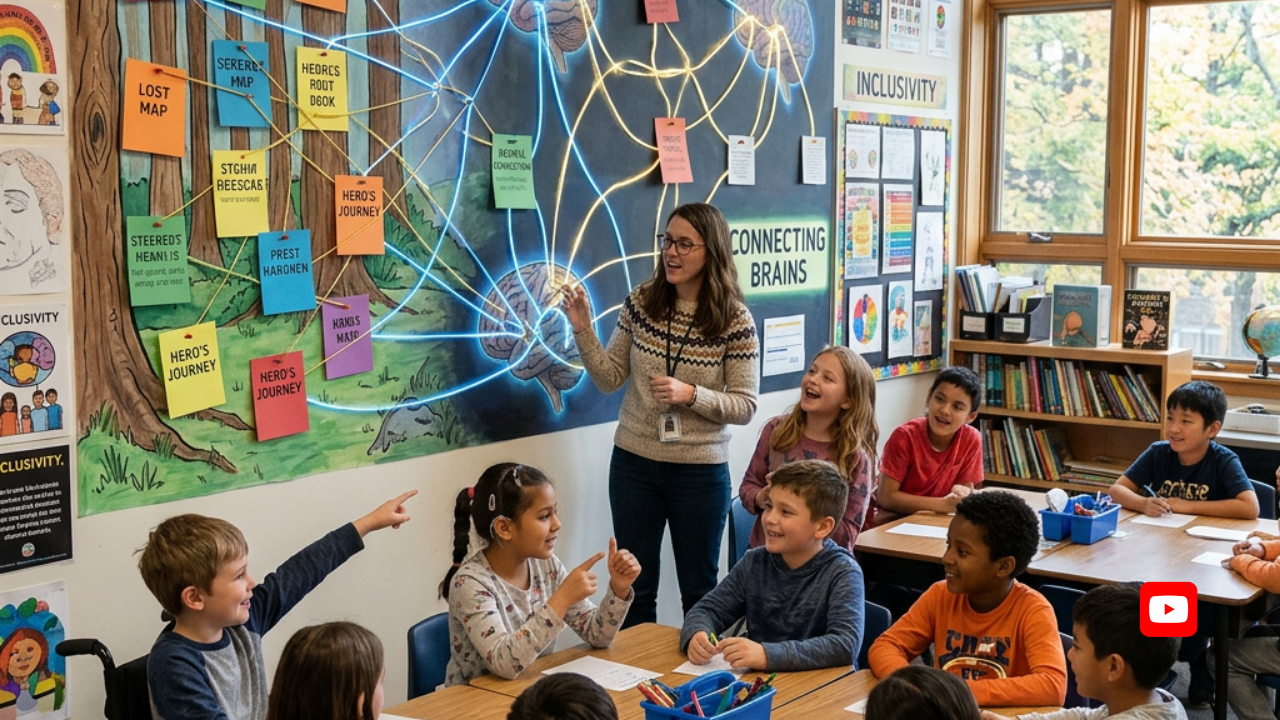
Inclusive Pedagogy: Enhancing Multiliteracy
Click here to listen to the blog post instead Abstract In an increasingly globalized educational landscape, the demographic reality of classrooms is fundamentally multilingual, yet traditional pedagogical frameworks often remain optimized for monolingual delivery. Current data from UNESCO indicates that approximately 40% of the global population lacks access to instructional…
-

Duality of Language: Standard vs. Vernacular
Language functions in a duality: as a standardized system for uniformity and as a dynamic medium shaped by its speakers. This tension affects literary analysis, where formal structures conflict with regional dialects. Research highlights that vernacular narratives enhance emotional engagement, proving critical for authentic storytelling and deeper reader empathy in…
-

Bridging Humanities and STEM through Ancient Epics
Ancient epics reveal a blend of art and information architecture, showcasing the connection between humanities and STEM. By using rhythmic constraints and ciphers, ancient storytellers engaged audiences while enhancing cognitive resilience. Education should embrace linguistic relativity in cryptography, empowering students to appreciate the integration of language and mathematics in modern…
-

Rebuilding Reading in a Distracted World
Many people feel unable to read due to distractions and cognitive overload from modern digital environments. Research indicates that these factors lower reading comprehension and enjoyment. However, reading desire can be restored through intentional practices such as micro-reading, reducing digital noise, and fostering a supportive reading culture at home and…
-

The Architecture of Childhood
Childhood development is profoundly influenced by community, as children grow linguistically, cognitively, and emotionally within various social environments. Migration and displacement can enhance linguistic skills yet disrupt continuity, stressing the need for community support. Strong family bonds and resource-rich neighborhoods significantly contribute to children’s well-being, shaping their future adaptability and…
-

The Importance of Differentiated Instruction in Middle School
Middle school serves as a complex crossroads for students’ developmental changes, especially during early adolescence. Differentiated instruction is essential to accommodate varying cognitive, emotional, and social needs. Research indicates that diverse teaching methods enhance engagement and learning, honoring each student’s unique growth and facilitating access to rigorous content.
-

Storytelling as a Tool for Classroom Differentiation
In a seventh-grade science class, a story about a wolf in a forest transforms the lesson on ecosystems into a vivid experience. Students engage deeply, understanding complex concepts through storytelling. This approach fosters emotional connection, empathy, and diverse learning pathways, illustrating that every learner’s story matters in the educational journey.
You must be logged in to post a comment.